


A standard homeowners insurance policy covers damage or destruction of your home and its contents. It also includes personal liability coverage. This protects you financially if someone is injured or their property is damaged on or off your property, or if you're sued for issues like defamation.
While homeowners insurance offers broad protection, it doesn’t cover everything. Let’s look at some losses that are usually excluded from coverage.
What are homeowners insurance exclusions?
An exclusion is a specific type of loss your insurance policy doesn't cover. You’ll have to pay for the loss out of your own pocket.
The only way to safeguard against some exclusions is to make a financial plan to save money for home maintenance and repairs. Wear and tear eventually cause materials to degrade over time. That’s normal and should be factored into your home ownership plan. Other exclusions can be insured, but you have to add them to your home insurance or obtain a separate policy. Your insurance agent can help you navigate coverage exclusions.
Common exclusions
Homeowners policies typically cover damage caused by explosions, fires, lightning, hail, tornadoes, extreme cold and theft. However, they frequently exclude certain disasters and incidents, some of which cannot be insured under any policy. The most common exclusions are listed below.
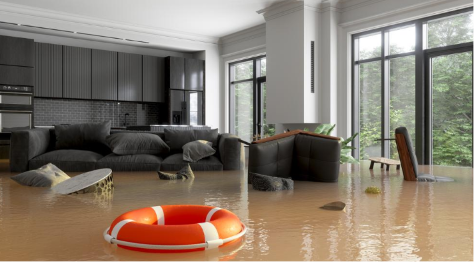
Floods — All “flooding” is not the same from an insurance perspective. Homeowners insurance offers broad protection but excludes certain types of water damage. It typically covers water damage caused by sudden accidental events inside your home, like burst pipes or rain entering due to storm damage. However, it does not cover flooding.
Flooding can be caused by water entering your home from swollen rivers, flash rain runoff, improper land grading or ground saturation. Overburdened drainage systems can cause sump pump failures or sewer backups. Your agent can help you obtain separate flood insurance for flood coverage, and they can easily add sewer backup coverage to your home policy.
Earthquakes, sinkholes and other ground movement —You’ll need a special policy to cover losses caused by earthquakes, landslides, mudslides or sinkholes. These are almost always listed as exclusions on homeowners policies. In Florida and Tennessee, insurers are required to offer optional sinkhole protection because it is a prevalent issue.
Sinkholes and earthquakes are different coverages, despite both being types of earth movements. Ask your agent if earthquake and sinkhole endorsements are right for you.
Windstorm, hurricane and wildfire damage — Losses caused by these events are often excluded in areas where they are common. If you live in an area prone to these types of disasters, discuss your options with your insurance agent. You may have to accept high deductibles (the amount you must pay before insurance kicks in) to get coverage.
Mold — Homeowners insurance usually does not cover mold damage. For coverage to apply, policies usually require the onset of mold to be sudden, accidental, or caused by an incident already covered, such as water damage from rain entering your house after a tree falls on your roof.
If you have water damage, you are expected to take immediate action to prevent mold growth. This includes using fans, sopping up standing water and taking other measures. In many cases, the insurer will reimburse you for the costs of drying the area to prevent mold after a covered incident.
Power failures — Power failures that are caused by the utility company (an exploded transformer) or a non-covered hazard (earthquake or other exclusion) aren’t covered. But if your house is struck by lightning, causing a power failure, you would be covered. Reimbursement for food spoilage resulting from an extended power failure due to a covered event is limited. Ask your agent about food spoilage and if you need extra coverage.
Wear and tear — You are expected to maintain your home. An insurance claim will be denied if the loss or liability is due to general wear and tear, or if you have failed to perform basic repairs. For example, ceiling damage caused by a 20-year-old roof that leaks will not be covered, nor will water damage caused by a leaking pipe you failed to replace.
Infestations — Damage caused by animal infestations such as bedbugs, termites, or mice is excluded under your policy. Eradication of infestation is also not covered. You are responsible for preventing and managing pests through regular upkeep. If an infestation leads to damage from a covered hazard, like an electrical fire, the resulting damage may be covered. However, if the insurance company relates the cause of the damage to neglect or improper maintenance on your part, it can result in a claim denial. If you suspect an infestation, call a pest control professional immediately.
Disease, war or government actions — Insurance companies often exclude mass catastrophic events they define as either an “act of God” or a “force majeure.” More often seen in business contract liability, both terms describe unforeseeable, unpreventable events. (If either term is listed as an exclusion on your home policy, ask your agent to clarify it.) Instead of calling them force majeure events, home insurance policies specifically name these exclusions, such as disease, war, nuclear exposure, acts of terrorism, seizures, and other government actions.
On the other hand, riots or civil commotion are usually covered under home insurance.
Specific dog breeds — Insurance companies often deny liability coverage for injury or damage caused by specific breeds of dogs based on their aggressive nature. These breeds will be listed by name in the exclusions clause. Other insurance companies may allow coverage for a higher premium or require approval based on proof of the dog’s positive behavioral history or training. Some specialty insurance companies offer stand-alone policies for hard-to-insure animals.
Vacant or unoccupied homes — Whether your home is completely vacant or you are not residing in it for an extended period, a loss that happens during one of these periods could be excluded. This is because the initial policy is written assuming someone will be living in the home. If you plan to be away from home for more than a month, tell your insurance agent. You can purchase vacant or unoccupied home coverage for the time you’re away.
Short-term rental or home sharing — If you rent your home for short periods, such as on a home-sharing app, you may not be covered. Standard home insurance covers the belongings of the people who live in the house. When you rent your home to others, you open yourself to risks. Unfortunately, people who engage in short-term rentals may not respect your home or rules, or care about whether they cause damage. If you don’t tell your insurance company that you use your home for these purposes, you risk a claim denial for not disclosing its use. Additionally, any income you earn from these events could be considered a home business. This is also typically excluded from home insurance policies. If you rent space in your home, ask your agent about temporary and short-term rental insurance.
Home-based business — If you run a business out of your home, losses would be excluded. For example, let’s say you convert your basement into a sewing space where you create custom-made jackets for sale online. One day, your house catches fire. Since the items are for your home-based business, the inventory, materials and machinery wouldn’t be reimbursed. Let’s take the example a step further. Imagine you also have client fittings in your basement studio. One day, a client badly injures themselves after falling down the stairs. They sue. Your home insurance could deny your liability claim because the guest was a customer of your home-based business. Ask your agent about getting a micro business owners policy (micro-BOP) to cover your home business liabilities.
High-risk activities and property features — Certain high-risk features and activities, such as pools, trampolines and water features, may increase the cost of your policy due to the associated risks. You might need to provide proof of safety measures (pool covers and fencing), or both, to obtain coverage. Don’t fib about having a pool or other feature to secure a lower-cost home insurance policy. The insurance company can deny your claim for nondisclosure or even drop you as a client after you have a claim. Also, if you use all-terrain vehicles, snowmobiles or golf carts, let your agent know. You may need a separate policy depending on why and where you drive them.
Liability involving controlled substances — Injuries or property damage arising out of the use, sale, manufacture or distribution of a controlled substance are not covered. Controlled substances include marijuana and all narcotic drugs, among others. The only exception is if you have a prescription from a licensed physician. Controlled substances are defined in sections 811 and 812 of the Food and Drugs law, and are referenced in many home insurance policies.
Intentional or criminal acts — Any property damage you intentionally cause will be excluded, and you could be charged with insurance fraud if you attempt to file a related claim. Liability coverage will also be excluded if the incident is due to dishonest, intentionally harmful or illegal behavior on your part. Insurance companies may often provide legal defense for allegations of intentional or criminal acts until liability or intent is proven. Review your policy for exact language.
Endorsements can help fill coverage gaps
Sometimes you can insure things that are excluded from your homeowners policy by adding them as an endorsement for a fee. Other times, you’ll need to buy a separate policy to be covered, like with flood insurance. However, some exclusions cannot be insured, such as wear and tear, infestations, and force majeure events. (But you may be able to secure a home warranty for wear and tear; more on this below.) Your insurance professional can help you identify which options are right for you.
A home warranty offers some coverage for wear and tear
A home warranty is different from home insurance. While homeowners insurance protects against unexpected damage or loss from events like fires, theft or natural disasters, a home warranty covers normal wear and tear of your home’s appliances and systems.
Home warranties are sold separately from home insurance, and their coverage varies. Read the terms and conditions before you purchase one of these. Some home warranty companies require you to provide maintenance records and home inspections, and will not cover appliances that are over a certain age. Other home warranties will cover any appliance, regardless of age or maintenance history.
Ask your agent about exclusions
While your homeowners insurance offers a substantial financial cushion after a loss, check all the exclusions. You may need to add protection for events that fall outside the standard coverage. An insurance agent can advise you on how to protect yourself and your budget from unexpected exclusions.
______________________________________________________________
This content is for informational purposes only and not for the purpose of providing professional, financial, medical or legal advice. You should contact your licensed professional to obtain advice with respect to any particular issue or problem.
Copyright © 2025 Applied Systems, Inc. All rights reserved.
